Business Valuation
Company and share valuations for investments, changes in ownership and proposed transactions.
Valuations for investments, ownership changes and transactions

Value of a proposed investment
Valuation of the company and the stake an investor would receive.
Capital and ownership
- New capital for the company and payments to existing shareholders.
- Company value implied by the investment amount and stake acquired.
- Growth and cash-flow assumptions supported by new funding.
Changes in ownership
Company and share valuations for changes in shareholding.
Valuation scope
- Company or ownership interest under review.
- Valuation date and purpose.
- Assets and liabilities included in the assessment.

Review of a proposed deal price
Comparison of the offer or asking price with the assessed valuation range.
Basis for comparison
- Enterprise value and the value of shares being acquired.
- Consistent treatment of cash and debt across price and valuation.
- Future earnings implied by the proposed price.
Select a service area.
Business valuation services

Selection of valuation methods and assessment of the resulting value range.
Comparison of valuation methods
Suitability of each method for the business, reliability of the available inputs and reasons for differences between estimates.
Formal reports
The appointed valuation professional issues any formal valuation report.
Discuss this work 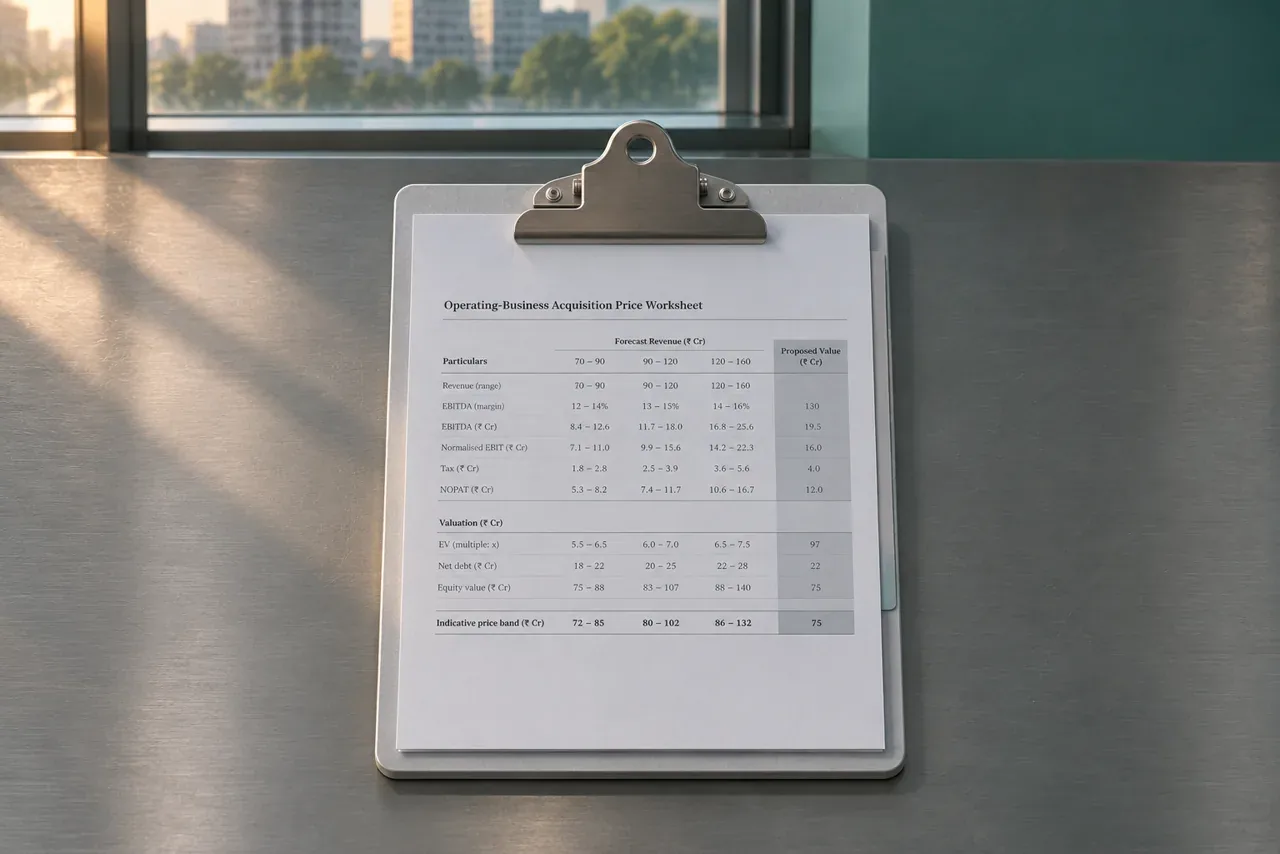
Valuation review for acquisitions, disposals and share transfers.
Forecasts behind the proposed price
Revenue, operating margins and cash flows needed to support the proposed price.
Valuation inputs for due diligence
Material assumptions requiring further evidence from trading records or management forecasts.
Discuss this work 
Sensitivity of the valuation range to changes in forecast assumptions.
Operating margins
Value at the planned margin compared with the effect of higher costs or slower margin improvement.
Capital expenditure
Cash-flow and valuation effects of changes to the timing or amount of capital expenditure.
Discuss this work 
Earnings and operating cash flow, with adjustments for working capital and debt.
Working capital
Stock levels, unpaid customer invoices and supplier balances, including the cash required when those balances change.
Debt and other commitments
Borrowings, liabilities and material commitments that affect the value attributable to shareholders.
Discuss this work